Rooftop solar for kothis, houses and builder floors.
A 3 kW system on a Delhi NCR home makes about 4,300 units a year, enough to wipe out most of a 300 unit monthly bill. With the PM Surya Ghar subsidy, most families earn the cost back in three to four years and keep saving for twenty more.
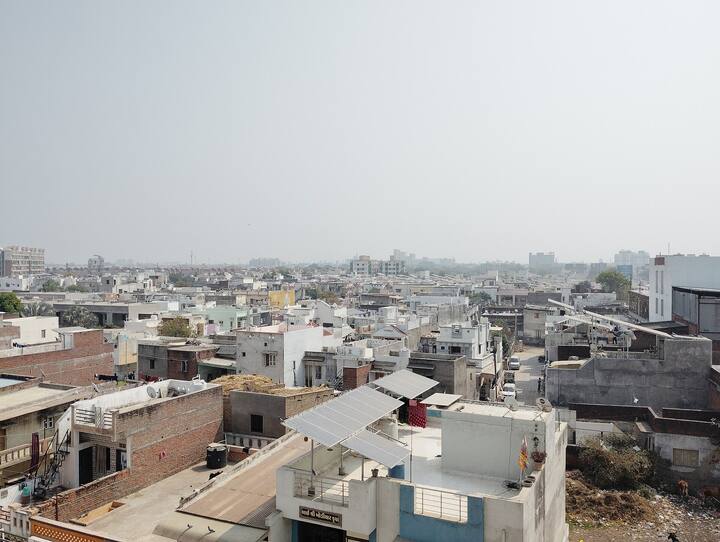
3 kW on-grid
For homes using 250 to 400 units a month. Gets the full ₹78,000 central subsidy. Needs about 300 sq ft of roof. About 4,300 units a year.
5 to 10 kW on-grid
For kothis running three or more ACs through summer. Saves at your highest tariff slab, which is where solar pays back fastest.
Hybrid with battery
Keeps essential loads running in a power cut. Worth it where cuts are frequent; we tell you honestly if your area does not need it.
What a home system costs in 2026
Before subsidy, a home system in Delhi NCR costs about ₹55,000 to ₹75,000 per kW, depending on size, panel type and how high the structure needs to be. Smaller systems cost more per kW because the inverter, wiring and paperwork are a fixed cost.
| System | Price before subsidy | Central subsidy | Units a year (approx.) |
|---|---|---|---|
| 2 kW | ₹1.4 to 1.6 lakh | ₹60,000 | 2,850 |
| 3 kW | ₹2.2 to 2.4 lakh | ₹78,000 | 4,300 |
| 5 kW | ₹3.3 to 3.6 lakh | ₹78,000 | 7,100 |
| 10 kW | ₹5.9 to 6.1 lakh | ₹78,000 | 14,200 |
Add the state top-up where it applies: up to ₹30,000 in Noida, Greater Noida and Ghaziabad, and Delhi's own top-up, which was raised in 2025 and again in 2026. The full breakdown is in our price guide and subsidy guide.
What we check on your roof
NCR roofs are busy places. On a survey we look at the things that decide whether a system performs for 25 years, not just whether panels fit.
- Shade through the day and the year. A neighbour's extra floor, a water tank, a mobile tower or a neem tree can cost more output than you would think, especially in winter when the sun is low.
- Roof rights. On builder floors and shared terraces we confirm who can sign before anything is drilled.
- Structure height. A raised structure lets you keep using the terrace for drying clothes, a water tank or a winter afternoon in the sun.
- Wind and monkeys. Pre-monsoon storms in May and June are strong; we anchor for them. In colonies with monkeys we use guards and tidy cable runs.
- Your meter and sanctioned load. If the system is bigger than your sanctioned load, we apply for a load change along with net metering.
On-grid or hybrid?
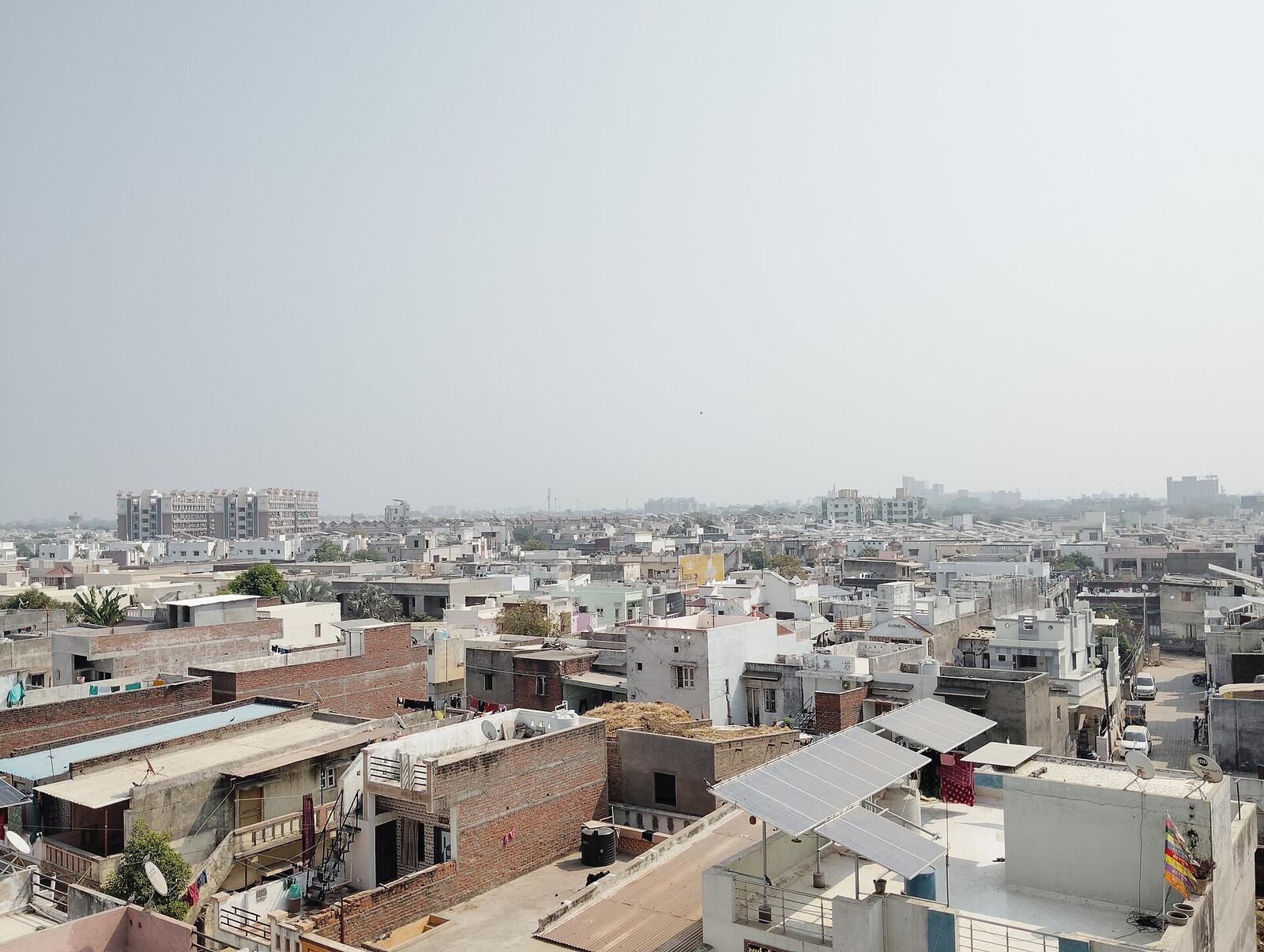
Most homes in Delhi NCR are best served by an on-grid system: it is cheaper, it gets the full subsidy and net metering banks your daytime surplus for the evening. It does switch off during a power cut, for the safety of linemen working on the grid. If cuts are frequent where you live, a hybrid system with a battery keeps your fans, lights and Wi-Fi running. Read the full comparison.
How the seven steps work for a home
From bill check to subsidy, a home usually takes three to six weeks. The roof work itself is one to three days.
-
1Horse 1 · Gayatri
Bill check
Share a recent electricity bill. We read your load, slab and usage pattern, and tell you the size that makes sense. Usually the same day.
-
2Horse 2 · Brihati
Roof survey
An engineer visits, checks the roof, measures shade through the day, notes the parapet, water tank and structure, and photographs the meter board.
-
3Horse 3 · Ushnik
Design and fixed quote
You get a layout, the expected yearly units, the subsidy you qualify for and one fixed price. No surprises added on installation day.
-
4Horse 4 · Jagati
Paperwork
We file on the PM Surya Ghar portal and with your DISCOM for feasibility and net metering, and track every approval for you.
-
5Horse 5 · Trishtubh
Installation
Rust-proof structure, India-made panels, inverter, earthing and lightning protection. Most homes are done in one to three days on the roof.
-
6Horse 6 · Anushtubh
Net meter and inspection
Your DISCOM inspects the system and fits the net meter. Then the commissioning certificate is issued on the portal.
-
7Horse 7 · Pankti
Subsidy and care
You redeem the subsidy, which goes straight to your bank account. We stay on for five years of maintenance, cleaning advice and app monitoring.
What is included
- India-made (DCR) panels from ALMM listed makers, so you qualify for subsidy
- Inverter sized to your system, with app monitoring
- Hot-dip galvanised structure, earthing and lightning arrester
- PM Surya Ghar registration, DISCOM feasibility, net meter application and inspection follow-up
- 25-year panel performance warranty and five years of maintenance visits
We have done 300+ installations across NCR and the tricity. Pick your city for local DISCOM details: Delhi, Gurugram, Noida, Greater Noida, Ghaziabad, Faridabad or Chandigarh, Mohali and Panchkula.
Common questions
What size solar system does a home in Delhi NCR need?
Can I install solar on a builder floor?
How much roof space do I need?
Will the subsidy cover a 10 kW system?
What maintenance does a home system need?
Put the sun's chariot on your roof.
One visit tells you how many units your roof can make, what the subsidy covers and what you will pay. The survey is free and there is no obligation.
- PM Surya Ghar registered process and paperwork handled
- India-made (DCR) panels that qualify for subsidy
- Five years of maintenance on every home system
Prefer to talk? +91 96502 10909 or WhatsApp us