Cut common-area bills for every flat.
Lifts, pumps, corridor lights and the clubhouse run all day, which is exactly when the sun is up. A rooftop plant on your towers can bring down the maintenance charge for every resident, with ₹18,000 per kW in central subsidy.
Why societies are a strong fit for solar
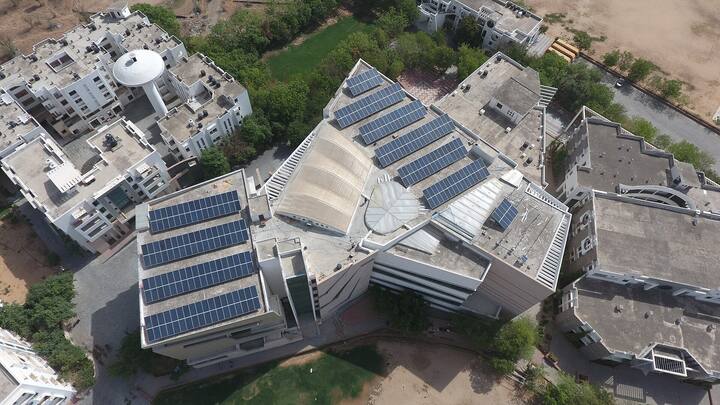
Common-area power in a group housing society is billed at a commercial or bulk rate in many DISCOMs, and most of it is used in daylight. That combination means solar units replace expensive grid units almost one for one. Tower roofs are also large, flat and shade-free compared to individual homes.
| Item | What applies |
|---|---|
| Central subsidy | ₹18,000 per kW for common facilities, including EV charging |
| Size limit | Up to 500 kW, at 3 kW per house, including residents' own plants |
| Output | About 1,400 to 1,450 units per kW a year in NCR |
| Metering | Net metering; group and virtual net metering in Delhi and Punjab |
| Delhi extra | State support for GHS and RWA common facilities under the Delhi Solar Policy |
A worked example
Take a 300 flat society in Noida or Gurugram with a 100 kW plant on its tower roofs. It makes roughly 1.4 lakh units a year. At a common-area rate of about ₹7 to ₹8 a unit, that is ₹10 to 11 lakh a year off the society's bill, or about ₹3,000 to ₹3,700 per flat per year. The central subsidy alone is ₹18 lakh on 100 kW.
How we work with a managing committee
- Bill and roof review. Send us twelve months of common-area bills and tower drawings. We do a site walk with the facility manager.
- Committee proposal. A short document with plant size, layout per tower, expected units, subsidy, payback and options (capex, EMI or RESCO).
- AGM support. We attend the general body meeting if you want, and answer residents' questions plainly.
- Approvals and portal. PM Surya Ghar registration as GHS or RWA, DISCOM feasibility and net metering.
- Installation in phases. Tower by tower, with safety barricading, lift and terrace access schedules agreed with the FM team.
- Monitoring dashboard. One view of every inverter for the committee and the FM, with monthly reports.
Roofs, waterproofing and fire safety
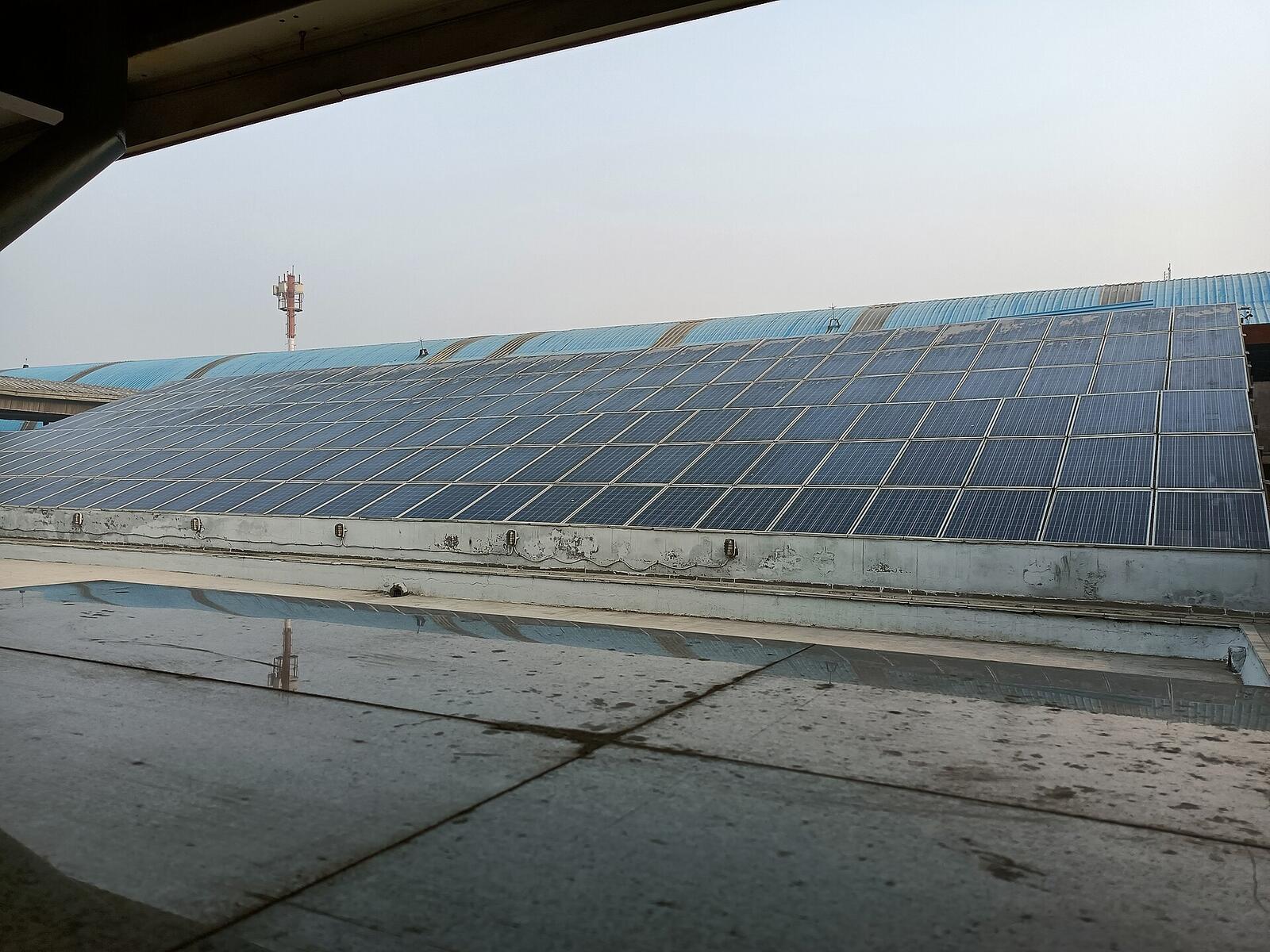
Societies worry about three things: leaks, fire and access. We use ballast or chemical anchors that do not break the waterproofing layer where possible, keep walkways clear for maintenance and fire access, run DC cables in metal trays, and fit DC isolators and surge protection at every inverter. All of this is in the drawings the committee approves.
Capex, EMI or zero investment
Societies with a healthy sinking fund usually buy the plant outright and get the subsidy. Others take a term loan and pay it from the savings. A third route is RESCO, where a developer owns the plant and sells units to the society below the grid rate for a fixed term. We set out all three for the committee. See solar loans and EMI.
We have done 300+ installations across NCR and the tricity. Ask for a society proposal, and see the local rules for Noida, Greater Noida, Gurugram and Delhi.
Common questions
How much subsidy does a housing society get for solar?
Does a society need an AGM resolution for solar?
Can individual flat owners in a society get solar?
What can a society's solar power run?
Is there a zero-investment option for societies?
Put the sun's chariot on your roof.
One visit tells you how many units your roof can make, what the subsidy covers and what you will pay. The survey is free and there is no obligation.
- PM Surya Ghar registered process and paperwork handled
- India-made (DCR) panels that qualify for subsidy
- Five years of maintenance on every home system
Prefer to talk? +91 96502 10909 or WhatsApp us