A chariot of stone, a chariot on your roof.
Every morning, the old stories say, Aruna gathers the reins of seven horses and brings the sun across the sky. On the coast of Odisha, people once carved that journey in stone. This is the story behind our name, and what a 700 year old temple can teach about a rooftop in Gurugram.
Chapter 1The temple that rides the sun
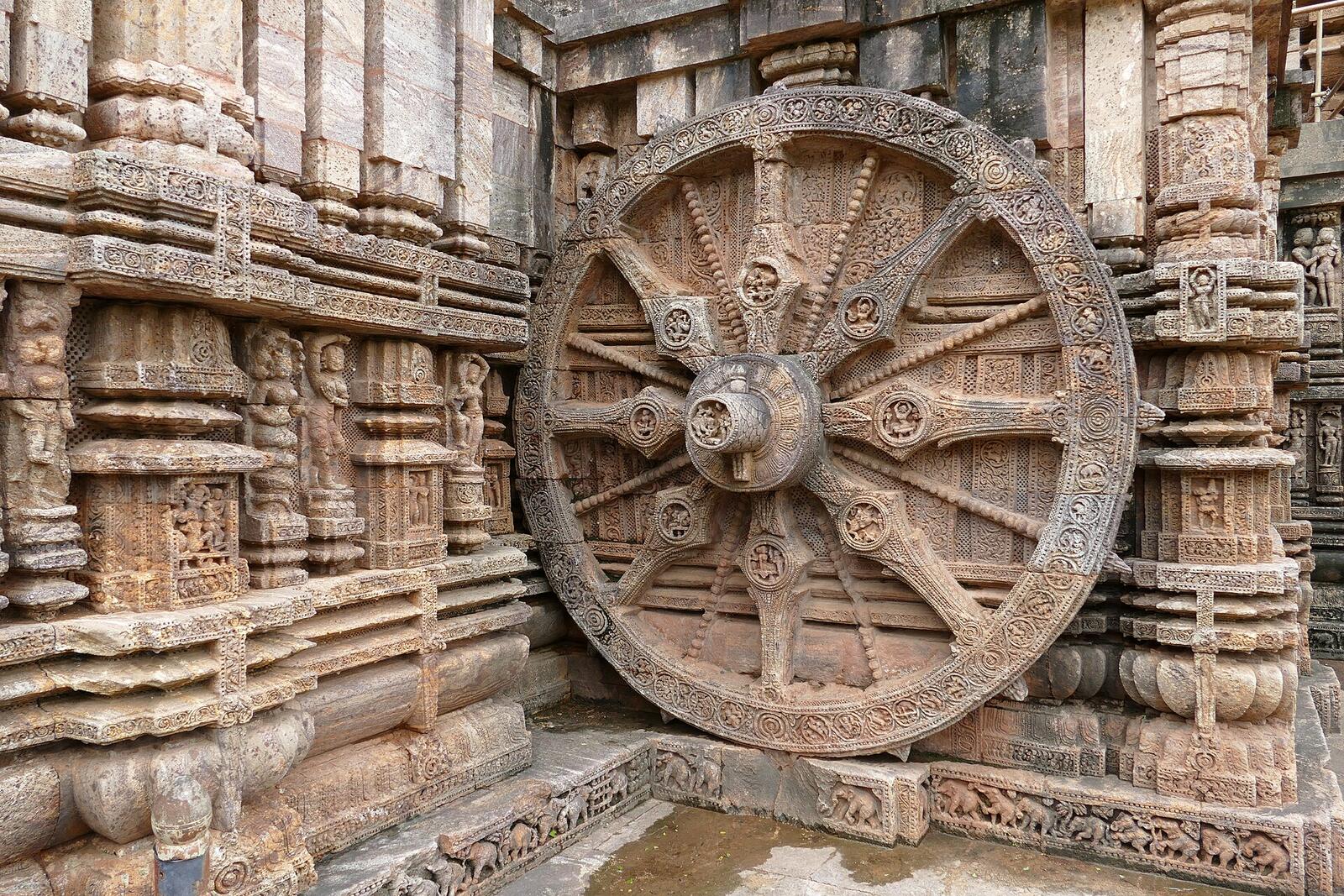
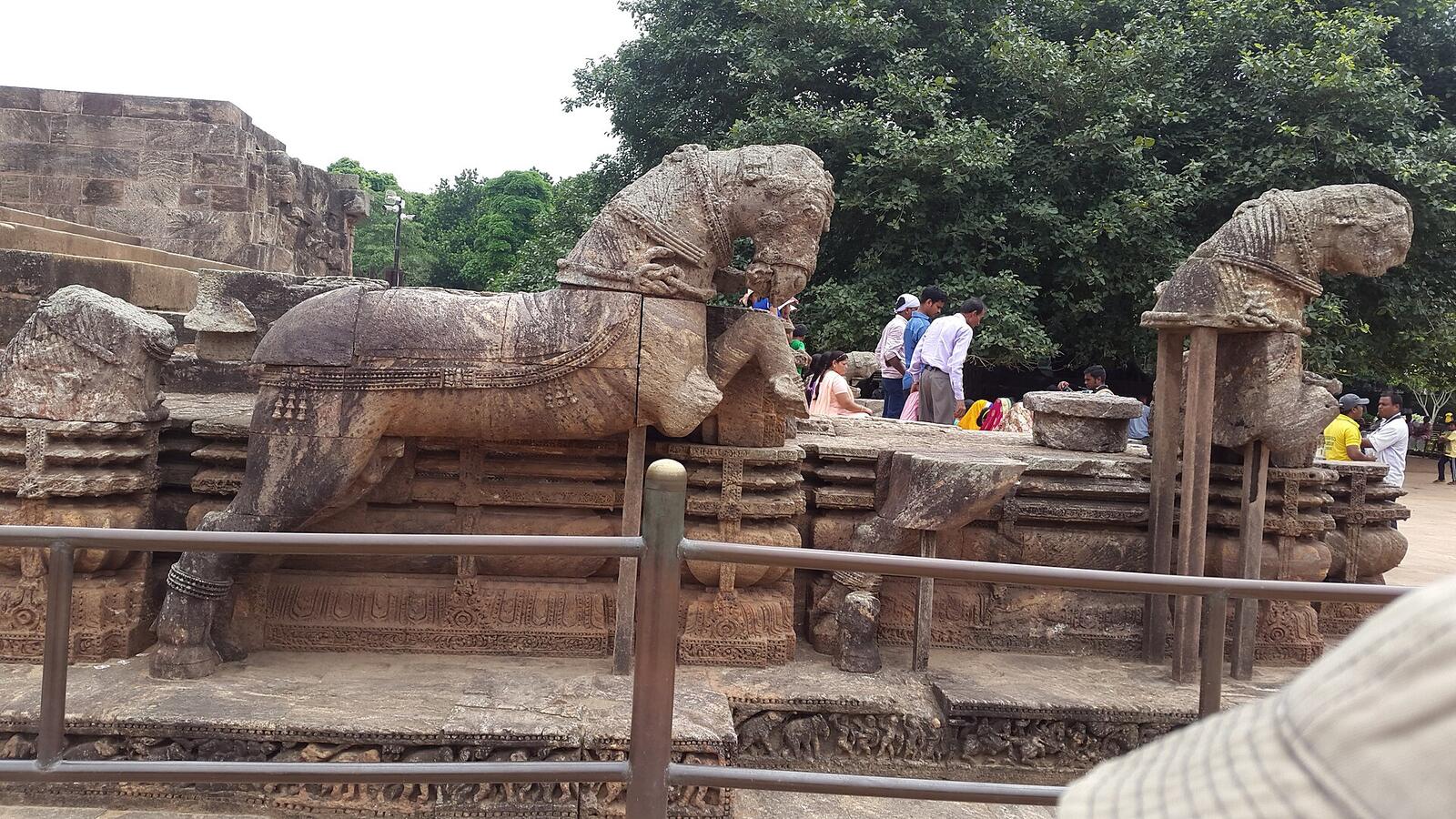
Around 1250 CE, King Narasimhadeva I of the Eastern Ganga dynasty built a temple to Surya at Konark, close to where the land meets the Bay of Bengal. He did not build a hall with a sun inside it. He built the sun's chariot itself: a vast platform on twenty-four carved stone wheels, pulled by seven stone horses, the whole temple turned to face the sunrise.
The name says it plainly. Kona means corner. Arka means the sun. Konark is the corner where the sun arrives. UNESCO listed it as a World Heritage Site in 1984, and if you have a chocolate brown ₹10 note in your wallet, its wheel is on the back.
Chapter 2The sun as healer
Long before the temple, the Samba Purana tells of Samba, a son of Krishna, struck by a terrible skin disease through a curse. He was told only Surya could cure him. Samba went to Mitravana, a grove by the Chandrabhaga river near the sea, and prayed to the sun for twelve years. He was healed, and the place became sacred to Surya. Tradition places Konark on that spot.
We like this story because it frames the sun as something that restores. A rooftop system does a quieter version of the same work: it brings down a bill that grows every summer, and it takes a little load off a grid that still burns a lot of coal for the evening peak.
Chapter 3Twelve hundred builders and one boy
Local legend says the chief architect, Bishu Maharana, led twelve hundred artisans for twelve years. The temple was almost done, but the crowning stone would not sit. The king set a deadline. Bishu's son Dharmapada, who had grown up without ever meeting his father, arrived at the site at twelve years old, worked out how to set the final stone, and saved the craftsmen.
We are not twelve hundred people, and nobody gets twelve years. But the lesson that stuck with us is about the last stone. Most solar jobs do not fail on the panels. They stall at the end: the net meter that never comes, the subsidy that sits on a portal, the inspection nobody chased. So our process is built around finishing.
Chapter 4Wheels that tell the time
The Konark wheels are not only decoration. Each has eight thick spokes and eight thin ones. The thick spokes divide the day into eight prahars of three hours. The thin spokes halve each prahar. Beads carved around the rim mark finer steps. Stand by a wheel on a sunny day, and the shadow of the axle falls across the spokes and tells you the time.
That is our favourite idea in the whole temple, because it is exactly how we look at a roof. We do not ask whether a roof gets sun. We ask which hours, from which side, and what blocks it at 9 am in December when the sun is low over your neighbour's water tank.
Chapter 5Seven horses, seven steps
The Puranas name Surya's seven horses after the seven metres of Vedic verse: Gayatri, Brihati, Ushnik, Jagati, Trishtubh, Anushtubh and Pankti. Aruna, the dawn, holds their reins. Some readers see them as the seven colours in sunlight, others as the seven days of the week. We see seven steps from your first phone call to the subsidy in your bank account, and we gave each step a horse.
Every installation, start to finish.
-
1Horse 1 · Gayatri
Bill check
Share a recent electricity bill. We read your load, slab and usage pattern, and tell you the size that makes sense. Usually the same day.
-
2Horse 2 · Brihati
Roof survey
An engineer visits, checks the roof, measures shade through the day, notes the parapet, water tank and structure, and photographs the meter board.
-
3Horse 3 · Ushnik
Design and fixed quote
You get a layout, the expected yearly units, the subsidy you qualify for and one fixed price. No surprises added on installation day.
-
4Horse 4 · Jagati
Paperwork
We file on the PM Surya Ghar portal and with your DISCOM for feasibility and net metering, and track every approval for you.
-
5Horse 5 · Trishtubh
Installation
Rust-proof structure, India-made panels, inverter, earthing and lightning protection. Most homes are done in one to three days on the roof.
-
6Horse 6 · Anushtubh
Net meter and inspection
Your DISCOM inspects the system and fits the net meter. Then the commissioning certificate is issued on the portal.
-
7Horse 7 · Pankti
Subsidy and care
You redeem the subsidy, which goes straight to your bank account. We stay on for five years of maintenance, cleaning advice and app monitoring.
Chapter 6Twelve charioteers, twelve months
The Vishnu Purana says the sun's chariot carries a different Aditya each month, along with sages, musicians and attendants who ride for that season. It is a lovely way of saying that the sun is not the same in every month. In Delhi NCR that is very true. April and May are bright and long. July and August bring clouds. November to January bring the haze.
So we size every system on the full year, with a realistic allowance for smog and dust, and we tell you plainly how many units to expect in December as well as in May.
Chapter 7Why the q
Konark belongs to everyone. Konarq is our small tribute to it, spelled our way. The q is a reminder that we are a modern team doing modern work: India-made TOPCon and mono PERC panels, app monitoring, net meters and online subsidy portals. The idea underneath is old. Face the sun, build carefully, and finish the last stone.
"Here the language of stone surpasses the language of man."Rabindranath Tagore, on Konark
We have done 300+ installations across Delhi NCR and the Chandigarh tricity. If you would like your roof read the way a Konark wheel reads the sun, book a free roof survey or start with the solar calculator.
Common questions
Why is the company called Konarq?
Are the Konark wheels really sundials?
What are the names of the seven horses of Surya?
Is the Konark wheel on the ₹10 note?
Put the sun's chariot on your roof.
One visit tells you how many units your roof can make, what the subsidy covers and what you will pay. The survey is free and there is no obligation.
- PM Surya Ghar registered process and paperwork handled
- India-made (DCR) panels that qualify for subsidy
- Five years of maintenance on every home system
Prefer to talk? +91 96502 10909 or WhatsApp us